If you are shopping for horse property in La Cresta, a big acreage number can look exciting at first glance. But in this part of Riverside County, the real question is not just how many acres you get. It is how much of that land actually works for horses, daily riding, and long-term upkeep. This guide will help you look past the listing language and focus on the details that matter most. Let’s dive in.
Why La Cresta Requires a Closer Look
La Cresta sits in the Santa Rosa Plateau and De Luz policy area, where Riverside County describes the landscape as rolling hills, steep slopes, and valleys mixed with farms, ranches, and equestrian estates. The County also notes that access into the area is limited by terrain, with Clinton Keith Road and De Luz Road serving as the two major routes in.
That setting is a big part of La Cresta’s appeal. It also means buying equestrian-friendly property here takes more than checking a box for "horse property." A parcel may be large on paper but still have limited usable space once you account for slope, access, and site constraints.
Start With Usable Acreage
One of the biggest mistakes buyers make is focusing on gross acreage instead of usable acreage. In La Cresta, hillsides, irregular terrain, and drainage patterns can reduce the area that is practical for a barn, turnout, trailer access, hay storage, and riding space.
As you tour a property, try to separate what looks impressive from what functions well. Relatively flat, serviceable ground is usually far more valuable than steep land that is hard to fence, maintain, or safely use for horses.
What usable land should support
Your property layout should have enough room for the basics without pushing everything onto a slope. That often includes:
- Barn or shelter space
- Turnout or paddock areas
- Trailer parking and maneuvering room
- Hay and feed storage
- Gates and access lanes
- Space for septic and well separation requirements
If those pieces all compete for the same small flat pad, the parcel may not work as well as it first appears.
Shape matters too
A parcel can have enough acreage and still be awkward for horse use. Narrow sections, odd angles, or split-level layouts can make fencing, turnout rotation, and movement around the property harder than expected.
Extension guidance on pasture planning supports this practical approach. Relatively flat ground, workable layouts, and areas that are easier to fence and rotate tend to function better for horses over time.
Check Zoning and Horse Setbacks Early
In Riverside County, noncommercial horse keeping is allowed on lots of at least 20,000 square feet and 100 feet in width. The ordinance also requires horses to be kept 100 feet from any street and 20 feet from property lines. Under that rule set, the county allows up to two horses per 20,000 square feet, with a cap of four horses per lot.
Those rules matter because not every parcel advertised as horse property will automatically fit your plans. Zoning is parcel-specific, so you should confirm the actual zoning designation and check for any recorded restrictions before assuming the site is compliant for your intended use.
Why setbacks can shrink your options
Setbacks can take a bigger bite out of usable land than many buyers expect. Once you factor in horse setbacks, plus room for a septic system and well placement, a site can start to feel much smaller.
This is especially true on irregular or sloped parcels. A property may technically qualify for horses, but the practical area left for barns, paddocks, or turnout may be limited.
Evaluate Barns and Horse Improvements for Function
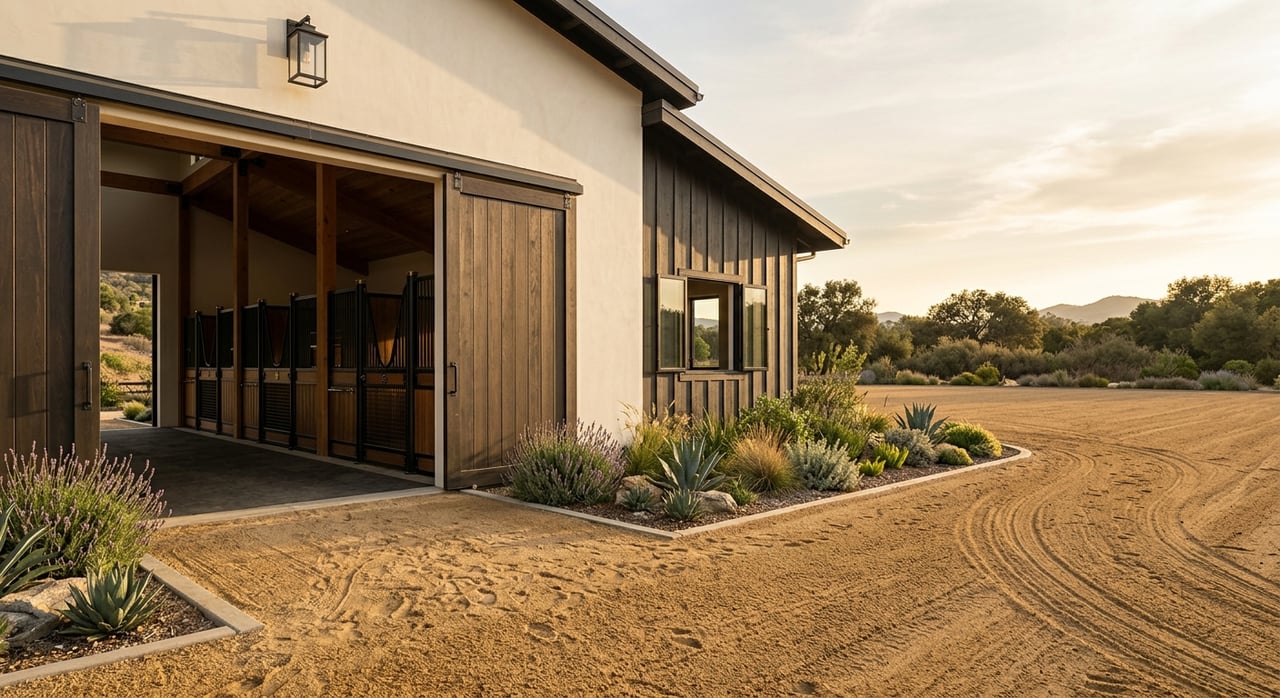
Existing horse improvements can save time and money, but only if they work well in real life. A barn, stalls, or arena may look appealing in photos, yet still have poor airflow, weak drainage, or a layout that creates daily hassle.
When you walk the property, focus on how the improvements perform. Look beyond whether they exist and ask whether they support healthy horses and manageable maintenance.
Ventilation and airflow matter
University extension guidance recommends siting horse housing where airflow is not blocked and designing it with adequate roof ventilation. A barn with proper air exchange helps reduce moisture buildup and condensation, both of which can affect the overall environment inside.
If the barn feels closed in, damp, or stuffy, that is worth a closer look. Good orientation and ventilation are not flashy features, but they can make a meaningful difference.
Drainage is a daily quality-of-life issue
Drainage matters just as much as structure quality. Guidance for horse properties recommends placing buildings, feed areas, and shelters on higher ground and using drainage measures where needed.
As you tour, pay close attention to the barn aisle, paddocks, arena edge, gates, and trailer area. If those spots collect water or stay muddy, the property may require more maintenance and improvement work than you planned for.
Look Closely at Water, Septic, and Utility Setup
Rural utility due diligence is essential in La Cresta. Riverside County Environmental Health states that homes in rural areas may be served by an individual domestic well or a water system, and wastewater must go to sewer or septic.
The county also notes that drought is a recurring challenge in Riverside County and that groundwater declines have caused some wells to produce less water or go dry. For horse property, that makes water reliability a major issue, not a small detail.
Questions to ask about wells and septic
Before you move forward, verify:
- Whether the property uses a well or water system
- The status and permitting of the well, if present
- Whether the septic system was properly permitted
- Whether there is enough room on site for required septic and well separation distances
Riverside County’s 2024 land application standards list substantial separation distances for septic components, including 100 feet from wells and 150 feet from public water wells. On a constrained parcel, those distances can affect where future improvements can go.
Think Through Access and Trailer Practicality
Because La Cresta is shaped by rugged terrain and limited entry routes, access should be part of your buying decision from day one. A parcel may feel private and scenic, but you still need to think about routine vehicle movement, service access, and trailer maneuverability.
Ask yourself how easy it is to enter, turn around, and park a horse trailer. Also consider how comfortably guests, farriers, feed deliveries, or maintenance vendors can reach the site.
Touring tips for access
As you walk or drive the property, look for:
- Safe driveway approach and visibility
- Enough width and turning radius for trailers
- Parking areas on stable ground
- Gates placed where entry and exit feel practical
- Interior access routes that are not overly steep or awkward
A property can be beautiful and still be frustrating to use every week if access was not designed with horses in mind.
Verify Trail Access, Not Just Trail Proximity
Many buyers are drawn to La Cresta because of the nearby Santa Rosa Plateau Ecological Reserve, a major protected open-space area in southwest Riverside County. County parks materials describe the reserve as 9,000 acres, while the California Department of Fish and Wildlife describes it as approximately 7,500 acres. County parks also note that horseback riding is popular in the Sylvan Meadows Multi-Use Area.
That said, nearby open space is not the same as easy ride-out access. The better question is whether the parcel has practical, verifiable equestrian access and safe routes to designated riding areas.
Why designated access matters
Under the Western Riverside County MSHCP, existing community trails are primarily used by equestrian users, regional trails can support hiking, biking, and equestrian use, and equestrian use is limited to designated trails. The plan also states that trails may close after heavy rains to protect habitat and prevent trail damage.
For you, that means trail access may be seasonal or weather-dependent. It is smart to confirm where designated access points are and avoid relying on assumed shortcuts or informal crossings.
Plan for Wildfire Risk and Ongoing Maintenance
Wildfire planning is a core part of buying hillside property in La Cresta. CAL FIRE classifies Fire Hazard Severity Zones as moderate, high, or very high based on factors such as fuel, terrain, climate, flame behavior, and ember movement.
Because fire can spread more quickly on steeper slopes, the local terrain makes defensible space especially important. This is not just a seasonal concern. It is part of owning and maintaining rural property in this area.
What to verify before making an offer
CAL FIRE states that 100 feet of defensible space is required by law. It also states that annual grass should be cut to no more than four inches and combustible materials should be kept 30 feet from the home.
As part of your due diligence, check:
- The parcel’s fire hazard designation
- Existing brush clearance and defensible space
- How manageable ongoing vegetation maintenance will be
- Whether the layout supports safer spacing around the home and horse areas
A property with steep slopes and heavy vegetation may require more time, cost, and planning than a buyer first expects.
A Smart La Cresta Buying Checklist
If you want to compare horse properties in La Cresta with confidence, keep your review grounded in how the parcel functions day to day. A smart evaluation usually includes:
- Confirming zoning, horse-count limits, and setbacks
- Measuring usable acreage, not just total acreage
- Checking whether flat ground supports your intended improvements
- Inspecting drainage around barns, gates, turnout, and trailer areas
- Verifying well and septic status and permit history
- Confirming designated equestrian access and any weather-related trail limits
- Reviewing fire hazard conditions and defensible space needs
In a market like La Cresta, that kind of detail matters. It helps you avoid expensive surprises and choose a property that fits both your riding goals and your long-term budget.
If you are looking at equestrian property in La Cresta, it helps to work with someone who understands both the land and the numbers behind the decision. Jeff Engstrom can help you evaluate usable acreage, property constraints, and the practical trade-offs that come with buying in Southwest Riverside County.
FAQs
What makes a La Cresta property equestrian-friendly?
- In La Cresta, equestrian-friendly usually means more than large acreage. You should look for usable flat ground, workable access, practical fencing layout, space for horse setbacks, and room for utilities like wells and septic.
How many horses can you keep on a Riverside County residential lot?
- Riverside County allows noncommercial horse keeping on lots of at least 20,000 square feet and 100 feet in width, with up to two horses per 20,000 square feet and a maximum of four horses per lot under that rule set. You should still verify the parcel’s exact zoning and any recorded restrictions.
Why is usable acreage important when buying horse property in La Cresta?
- Usable acreage matters because slopes, awkward parcel shape, drainage issues, and required setbacks can leave much less practical horse space than the total acreage suggests.
What should you inspect on existing barns and paddocks in La Cresta?
- You should inspect airflow, roof ventilation, drainage, footing conditions, and whether key areas like gates, feed zones, and trailer parking sit on higher, better-drained ground.
How do wells and septic systems affect horse-property purchases in La Cresta?
- Wells and septic systems can affect where you place barns, paddocks, and future improvements. Riverside County requires permits for these systems, and required separation distances can limit how a parcel functions.
Is trail access guaranteed if a La Cresta property is near the Santa Rosa Plateau?
- No. Proximity to open space does not automatically mean practical ride-out access. You should confirm designated equestrian access points and ask whether trail use is restricted after heavy rain or other weather events.
Why is wildfire planning important for La Cresta horse properties?
- Wildfire planning is important because La Cresta includes hillside terrain where fire can spread more quickly. Defensible space, brush clearance, and ongoing vegetation management should be part of your buying decision.