If you’re comparing neighborhoods near Murrieta, one question matters fast: what are you actually getting with HOA dues? That’s especially true in Morgan Hill, where the community was planned with shared amenities, open space, and design standards from the start. If you want a clear, practical look at what the HOA does, what the amenities include, and how to think about the monthly cost, this guide will help you weigh the tradeoffs with confidence. Let’s dive in.
Morgan Hill’s Location Explained
Morgan Hill is not in the City of Murrieta. According to Riverside County planning documents, it sits southeast of Temecula in unincorporated Riverside County, with convenient access to Murrieta.
For many buyers, that distinction matters less than day-to-day convenience. If you work, shop, or spend time in Murrieta, Morgan Hill can still feel close and connected, even though it is part of a county-planned community rather than a Murrieta city neighborhood.
The bigger takeaway is how the community was designed. The Morgan Hill Specific Plan covers 478.3 acres and was planned for up to 1,121 homes, along with parks, recreation areas, open space, and roadway paseos.
What Makes Morgan Hill Different
Morgan Hill was built as a master-planned community, not simply as a group of homes on individual streets. That means shared areas and long-term maintenance were part of the original plan, rather than added later.
Riverside County’s approved plan includes 11.1 acres of parks, 3.7 acres of community recreation, 87.9 acres of open space and slopes, and 2.2 acres of roadway paseos. For you as a buyer, that usually translates into a more structured neighborhood environment with maintained common spaces and a more defined community layout.
What the Morgan Hill HOA Is Meant to Cover
A common misconception is that HOA dues mostly go toward paperwork and management. In Morgan Hill, the county-approved standards point to a much broader purpose.
The governing plan calls for a permanent master maintenance organization to own and maintain common recreation areas, open space, circulation systems, and landscaped areas. It also states that the master property owners’ association can assess owners for reasonable maintenance and management costs.
In plain terms, the HOA is intended to help maintain the community’s shared infrastructure. That includes items such as:
- Common recreation areas
- Open space areas
- Landscaping
- Irrigation systems
- Circulation systems
- Signage
- Common-area upkeep
- Parking oversight in association-controlled areas
If you are comparing Morgan Hill to a non-HOA neighborhood, this is the core value question. You are not just paying for administration. You are contributing to the maintenance of amenities and common areas that are built into the community plan.
Morgan Hill Amenities Buyers Should Know
The official specific plan outlines a private 3.7-acre community recreation center in Planning Area 24. That planned recreation package includes:
- A clubhouse
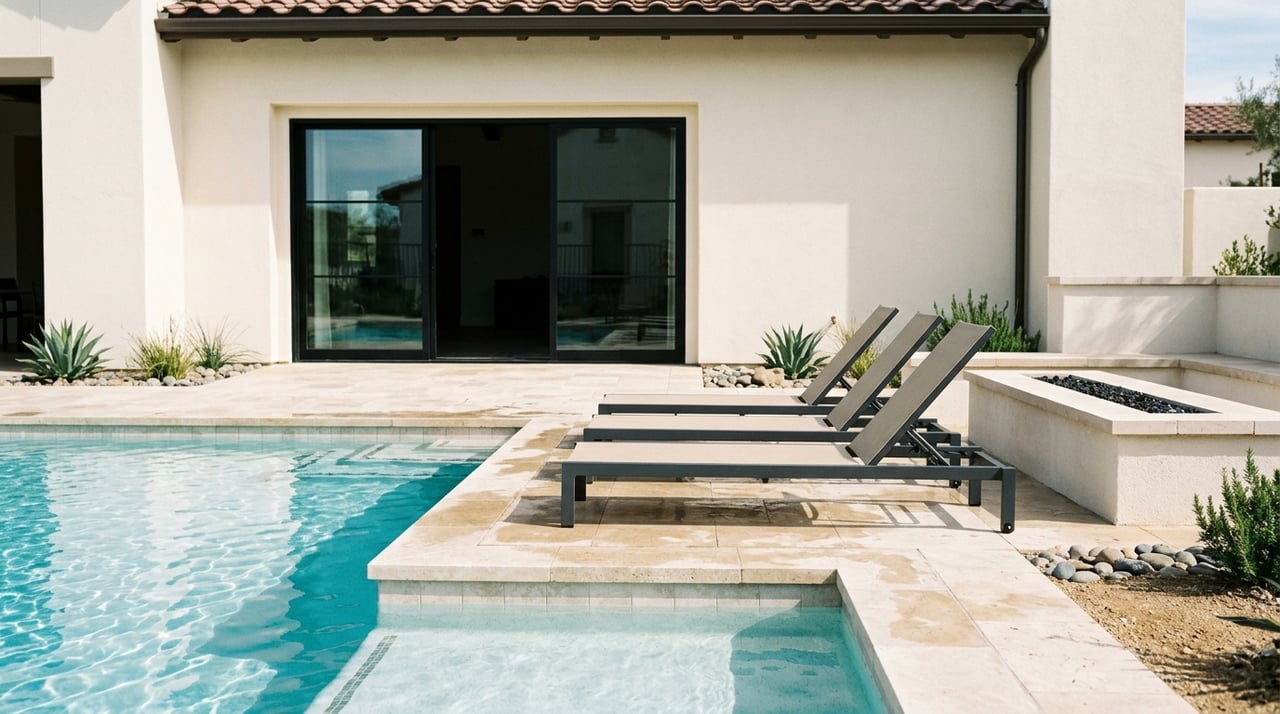
- Pool and deck areas
- An entertainment area
- Active recreation areas
- A children’s play area
The plan also includes trail features that add to the community layout. These include a recreational or equestrian trail along the southern and eastern boundaries and a community trail along Morgan Hill Drive that connects to the broader Southwest Area Community Plan trail system.
Some recent home listings have also described features such as a spa, tennis courts, a fitness center, a game room, an outdoor fireplace lounge area, and community events. Those descriptions can be useful as current market snapshots, but the county plan is the better source for understanding what was formally planned and supported as part of the community structure.
How to Think About the HOA Dues
Recent listing information has shown Morgan Hill HOA dues at about $119 per month, or roughly $1,428 per year. At least one recent listing specifically noted that the dues include common area maintenance.
The right way to evaluate that number is not to ask whether any HOA fee is good or bad on principle. Instead, ask what that monthly cost gives you access to and what upkeep it helps support.
For some buyers, the appeal is simple. A monthly HOA fee may feel worthwhile if you value maintained common spaces, recreation features, trails, and a more coordinated neighborhood appearance.
For other buyers, the same fee may feel less attractive if you prefer fewer rules and more flexibility over your home’s exterior or landscaping choices. Neither view is wrong. It comes down to your priorities, your budget, and how much you value shared amenities versus independence.
Community Standards and Buyer Tradeoffs
Morgan Hill’s county design guidelines are part of what gives the neighborhood a consistent look. The guidelines emphasize an early-California architectural theme, low building profiles, coordinated styles, and subdued colors and materials.
The standards are also fairly specific. For primary homes, the approved guidelines allow hip, gable, and shed roofs with pitches from 3:12 to 6:12, while prohibiting mansard, gambrel, and flat roofs, along with wood shakes and shingles.
Landscape standards also support a coordinated appearance. The guidelines favor drought-resistant plant palettes, shielded lighting, and screened utility equipment.
For buyers, this creates a real tradeoff. You may get a more visually consistent neighborhood environment, but you also accept more HOA oversight than you would in a non-HOA area.
Is Morgan Hill a Good Fit for Murrieta Buyers?
If you are searching from Murrieta and open to nearby communities, Morgan Hill may appeal to you for a few practical reasons. It offers a planned setting, shared amenities, open space, and easy regional access.
It may be a strong fit if you want:
- A master-planned community feel
- Shared recreation amenities
- Maintained common areas
- Trail connections and open space
- A neighborhood with more design consistency
It may be less ideal if you want:
- Minimal exterior rules
- No monthly HOA dues
- Greater freedom to change architectural or landscape elements without added review
This is where a side-by-side comparison helps. A lower-cost non-HOA option is not always the better value if it lacks the features you want. On the other hand, a planned community is not automatically the best choice if you will not use the amenities or prefer fewer restrictions.
A Practical Way to Compare Morgan Hill
When buyers look at Morgan Hill, I usually suggest treating the HOA as part of the total lifestyle and financial picture. Instead of focusing only on the monthly fee, compare what you are gaining and what responsibilities you are taking on.
Here are a few smart questions to ask as you evaluate the neighborhood:
What shared spaces matter to you?
If you expect to use the recreation center, trails, and maintained common areas, the dues may feel easier to justify. If those features are not important to you, the value calculation may look different.
How much do you care about design consistency?
Some buyers appreciate a neighborhood where architectural style, landscaping, and overall appearance are more tightly managed. Others would rather have more freedom over exterior decisions.
How does the fee fit your full monthly budget?
A fee around $119 per month may not seem large on its own, but it still needs to fit comfortably alongside your mortgage, taxes, insurance, and regular maintenance costs.
Are you comparing like with like?
A non-HOA home and an HOA home are not always direct substitutes. If one option includes planned recreation, trails, landscaping support for common areas, and more structured community upkeep, that should be part of your value comparison.
The Bottom Line on Morgan Hill HOA and Amenities
Morgan Hill was planned as an amenitized community with maintained recreation areas, open space, trails, and coordinated design standards. That means the HOA plays a meaningful role in the neighborhood, and the dues are intended to support shared infrastructure and upkeep, not just administration.
For Murrieta-area buyers, the decision usually comes down to fit. If you want a more structured community environment with planned amenities and maintained common spaces, Morgan Hill may offer strong value. If you prefer fewer rules and no HOA fee, you may be happier in a different type of neighborhood.
The best move is to compare Morgan Hill through both a lifestyle lens and a numbers lens. That way, you can decide whether the monthly cost matches how you actually want to live.
If you want help comparing Morgan Hill to nearby Murrieta and Temecula neighborhoods, Jeff Engstrom can help you look at the options with local insight and a clear, financially informed perspective.
FAQs
Is Morgan Hill in Murrieta or Temecula?
- Morgan Hill is southeast of Temecula in unincorporated Riverside County, with easy access to Murrieta.
What do Morgan Hill HOA dues cover?
- County-approved plans indicate the HOA is meant to support common recreation, open space, circulation systems, landscaping, irrigation, signage, parking oversight in common areas, and related maintenance and management.
What amenities are planned in Morgan Hill?
- The specific plan includes a private community recreation center with a clubhouse, pool and deck areas, an entertainment area, active recreation areas, a children’s play area, and community trail connections.
Are Morgan Hill HOA rules strict for homeowners?
- Morgan Hill has more detailed standards than a non-HOA neighborhood, including guidelines for architecture, roof types, landscaping, lighting, and overall visual consistency.
How much are Morgan Hill HOA dues?
- Recent listing information has shown dues at about $119 per month, or roughly $1,428 per year, though buyers should verify current amounts during their home search.
Are Morgan Hill HOA dues worth it for Murrieta buyers?
- That depends on your priorities. If you value shared amenities, trails, open space, and maintained common areas, the dues may feel worthwhile. If you prefer fewer rules and no HOA fee, another neighborhood may be a better fit.