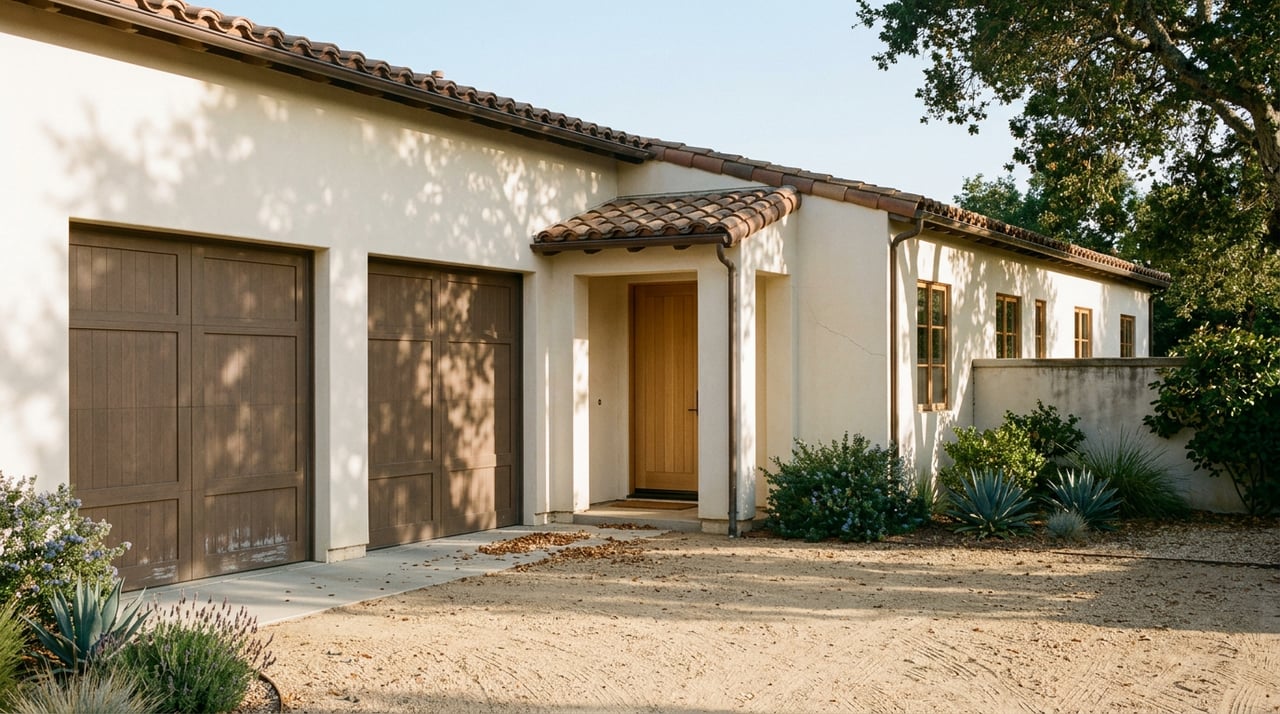
A buyer touring Morgan Hill this summer might see two listings in the same afternoon: a 2,600-square-foot home behind the clubhouse gates with a $120-a-month HOA bill, and a half-acre custom property ten minutes away with a four-car garage that isn't part of that clubhouse HOA at all. Both listings say "Morgan Hill." Both show up under the same neighborhood filter on every portal. And a buyer trying to use one to predict the other is going to get their budget wrong.
That's the thing nobody selling you on Morgan Hill's median price tells you upfront: there isn't one Morgan Hill. There are at least three, stitched together under a single marketing name, each with its own HOA structure, its own lot economics, and its own relationship to the clubhouse everyone assumes comes with the address.
One Name, Three Different Products
The community most people picture when they hear "Morgan Hill" is the HOA-governed tract built out over the last two decades on the hillside southeast of downtown Temecula, at the edge of Wine Country. This is the version with the private clubhouse: a roughly three-acre community center with pools, a spa, a fitness room, tennis courts, and a ballroom available for events. Dues here currently run roughly $100 to $125 a month depending on which listing or portal you're checking, and they buy access to that clubhouse along with a full calendar of resident activities, from a monthly book club to a Thursday pickleball group.
But drive a few streets over and you'll find Morgan Valley: half-acre-plus lots, homes running 4,000 square feet and up, four-car garages, and in some cases a rear garage door designed so owners can drive straight through into the backyard. These properties are not part of the clubhouse HOA. If you're comparing a Morgan Valley listing's carrying costs to the tract home you saw last weekend, you're not comparing two versions of the same product. You're comparing a subdivision with amenity dues to one without them.
Then there's Meadowview, a smaller pocket of half-acre-and-larger custom homes that rarely trades in the same price range as either of the other two. Local buyers who've spent time in the area describe it as its own category entirely, distinct enough that agents showing all three in one day routinely have to reset a client's expectations between stops.
| Product | Typical lot | Clubhouse HOA | What it buys |
|---|---|---|---|
| Morgan Hill tract (clubhouse) | Standard subdivision lot | Roughly $100–125/month | Pools, spa, gym, tennis, ballroom, resident events |
| Morgan Valley | Half-acre+ | Not part of clubhouse HOA | Larger garages, drive-through rear access, more land |
| Meadowview | Half-acre+ custom | Separate structure | Custom-built homes, distinct price tier |
None of this shows up when a search result hands you a single "Morgan Hill" median price. It's an average of three different products, and averaging them tells you less than knowing which one you're actually looking at.
The Portals Can't Agree Either, and That's the Tell
If the blended-average problem were only theoretical, the listing sites would at least agree with each other. They don't.
Over the three months ending April 2026, Redfin's data showed a median sale price of $900,000 for Morgan Hill, down 14.3% year over year, with homes selling in an average of 34 days compared to 58 days the year before, and just 7 homes sold that April versus 14 the prior year. Separately, Homes.com's current listing data puts the median sale price at $1,107,500, up 15% year over year, with homes taking 61 days to sell and 14 active listings on the market. Movoto's June 2026 figures showed a median list price of $999,000, down 8% both month over month and year over year, with a median 87 days on market.
Three sources, three medians, three different days-on-market figures, all describing the same calendar window in the same neighborhood name. That's not measurement error. It's what happens when a fixed handful of monthly sales gets sliced across three structurally different housing products and then reported as one number. A $900,000 tract home behind the clubhouse and a $1.5 million custom Morgan Valley property can both close in the same month and get folded into the same "Morgan Hill" median, even though nothing about their carrying costs, their HOA obligations, or their buyer pool has anything in common.
For a buyer, the takeaway isn't to distrust the data. It's to ask which slice of Morgan Hill a given number is actually describing before using it to plan an offer.
Why the Brand Name Still Works
None of this is a knock on the area. Christine Damko, the city's economic development manager, has described the appeal of communities like this one directly: "We have this small-town community feel but we have big city amenities." That tension between small-town pace and resort-style infrastructure is real, and it shows up in the amenity list. The clubhouse tract sits within the Great Oak High School boundary, alongside Tony Tobin Elementary and Vail Ranch Middle School, the three schools most often listed for the neighborhood. Residents have walking access to Morgan Hill Park and Madigan Park, and Galleron Park's off-leash dog area gives the community something a lot of HOA tracts skip. Public golf at Redhawk Golf Club and Journey at Pechanga sits just outside the gates.
The point isn't that the name is misleading. It's that the name covers more ground, literally and financially, than a single median price can represent.
The Mello-Roos Line That Changes the Math
Layer one more variable on top of the HOA question: Mello-Roos. Communities built in Temecula over the last few decades typically fall inside one or more Community Facilities Districts, known on your tax bill as CFDs. The Riverside County Office of Economic Development explains that these districts let a growing area finance its own infrastructure, roads, sewer lines, parks, sometimes school facilities, through a special tax that runs with the land rather than the owner. Temecula Valley Unified School District alone has formed multiple CFDs over the years to fund school construction, and the district's own CFD page confirms that buyers need their specific parcel number to see which district, and which assessment, actually applies to a given home.
Here's why this matters more in Morgan Hill than in an older, no-HOA Temecula neighborhood: the CFD tax is a flat dollar amount set when the district was formed, not a percentage of the home's price. For CFDs that fund ongoing maintenance and services, Riverside County's guidance notes the maximum special tax is typically increased each year based on the Consumer Price Index, with a state-mandated minimum annual increase of 2%. That means two homes on the same street, one bought years ago and one that just closed this year, can carry very different relative tax burdens even though they're assessed under the same CFD schedule. Combined with HOA dues, this adds real weight to the effective carrying cost on many newer Morgan Hill homes.
It also affects what you can borrow. Lenders fold HOA dues into your qualifying payment calculation alongside principal, interest, taxes, and insurance. A buyer comparing a Morgan Valley property with no clubhouse HOA to a tract home carrying $120 a month in dues isn't just comparing amenities. They're comparing two different monthly obligations that get weighed directly against their loan approval.
What to Ask Before You Fall for the Listing Photos
Before writing an offer on anything tagged "Morgan Hill," it's worth getting specific answers to a short list of questions:
- Which sub-community is this actually in: the clubhouse tract, Morgan Valley, or Meadowview?
- Does this HOA include clubhouse access, or is it a separate landscaping-only association?
- What CFD or CFDs apply to this parcel, and what is the current annual assessment?
- How does the effective tax rate here compare to a no-Mello-Roos property elsewhere in Temecula?
- What did comparable homes in this specific tract, not the blended Morgan Hill average, actually sell for in the last 90 days?
FAQ
Is Morgan Hill considered one HOA or several? The clubhouse-access tract operates under its own HOA. Morgan Valley and Meadowview are separate in structure and are not part of that same clubhouse association, even though all three carry the Morgan Hill name in casual use.
Why do different websites show different Morgan Hill days-on-market figures? Because they're each pulling from a small monthly sample that includes a mix of housing products with very different price points and buyer pools. A handful of custom-home sales can swing the average dramatically in either direction.
Does the Mello-Roos assessment ever go away? CFD bonds are repaid over time, and some districts do sunset once bonds are retired. Others fund ongoing services and continue indefinitely. The only reliable way to know is to check the specific CFD tied to a parcel, which the county and school district resources linked above can help confirm.
Morgan Hill's numbers reward a buyer who asks which Morgan Hill they're actually looking at. If you want a clear, numbers-first walkthrough of which tract, HOA, and CFD combination actually fits your budget, or if you already own here and want to see what your equity looks like against this year's real figures, reach out to Jeff Engstrom at Temecula Valley Homes. And if you're on the selling side of this market, his team's free home valuation is a fast way to see where your specific property lands.